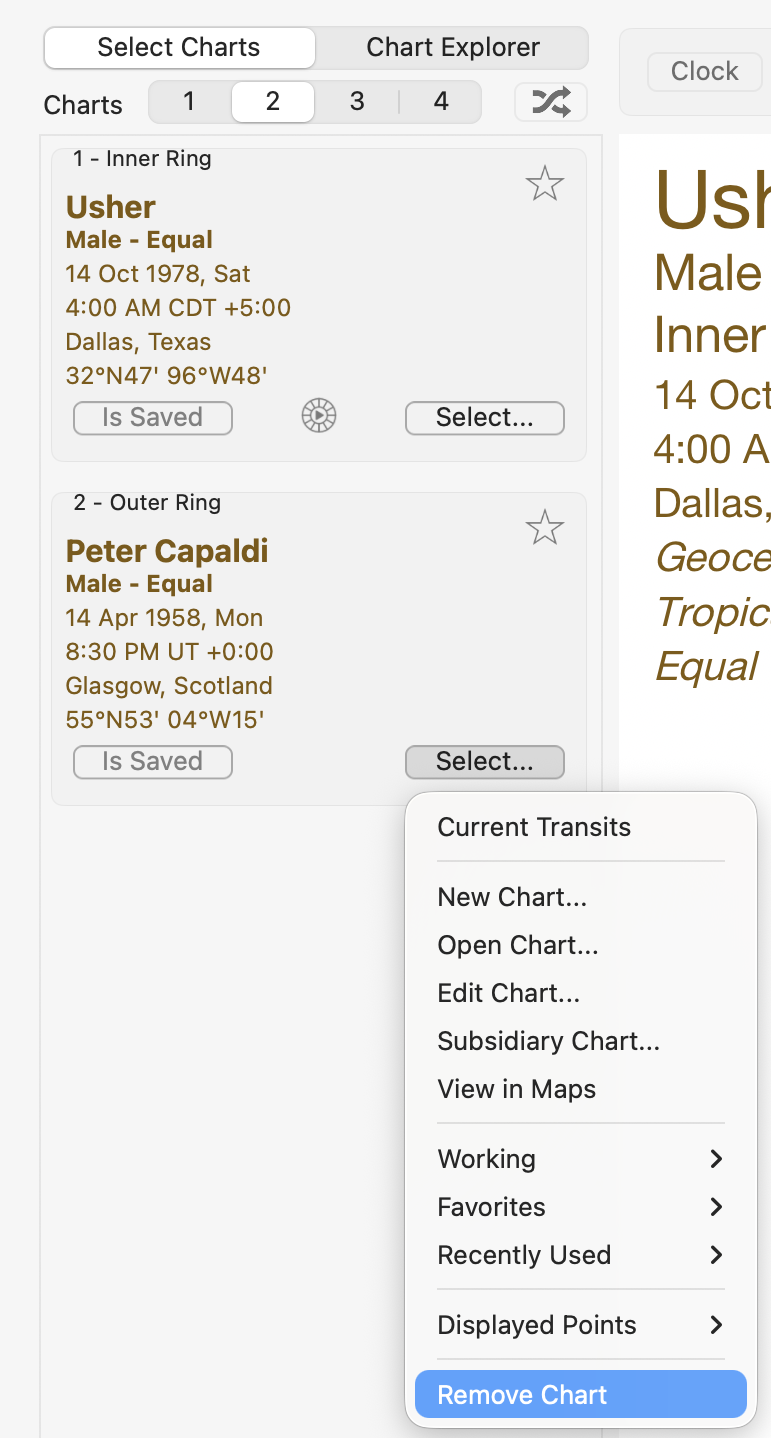
The "Charts" menu is where you can access all basic chart functionality. You can create/open up to four charts to work with at any one time, swapping their display positions in wheels, dials and grids as needed.
|
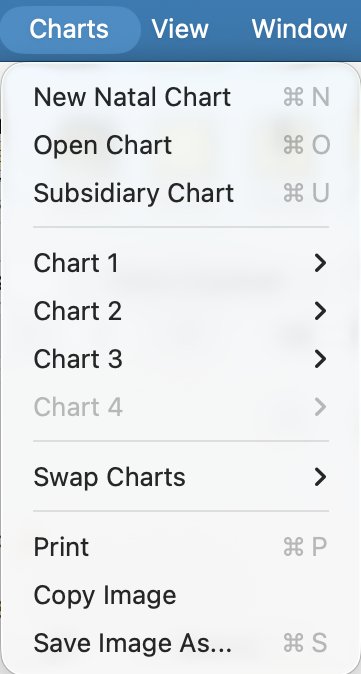
You can:
•create new natal and event charts
•save charts
•create subsidiary charts for natal and event charts
•open and edit saved charts
•print charts and reports
•copy chart images for pasting directly into other documents
•save charts as graphic files
•remove a currently selected chart (as long as it isn't the only selected chart)
For all the details on creating and using charts see Creating, Saving, Opening and Editing charts.
Working Charts
You can create a collection of (up to 20) working charts. A collection of working charts might be comprised of charts that are both favorites and not favorites, or none that are favorites. What it is designed for is more of temporary set of charts you want to be on hand for a specific project or other purpose. Then when that purpose is fulfilled you'd clear the working charts collection.
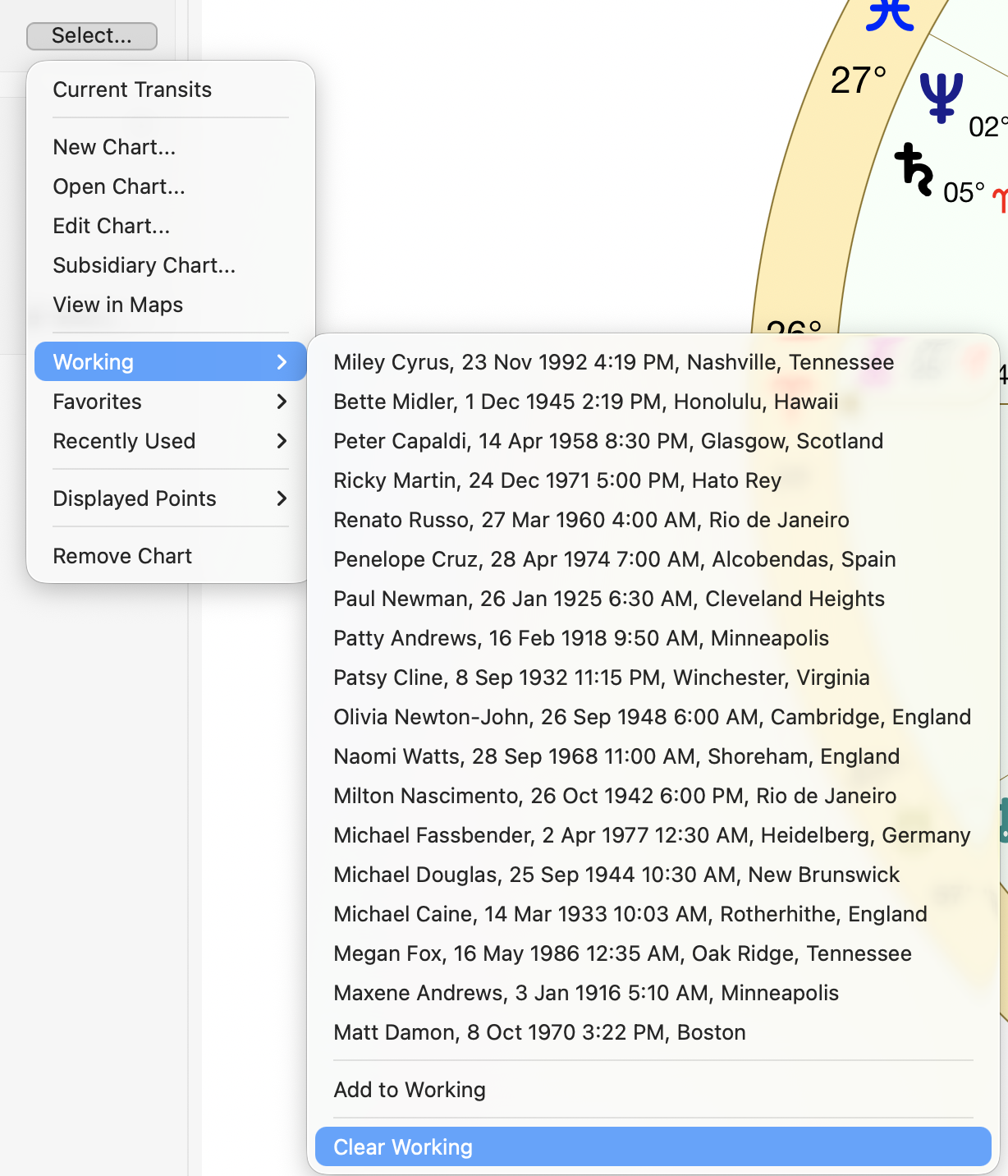
•You can access the working collection of charts from the Charts menu, then selecting a chart position, then the Working menu option, finally selecting the chart you want to be in that position from the list of Working Charts.
•You can also select Add to Working to add the chart currently selected in that wheel position to the Working Charts collection.
•You can also clear the entire collection of Working charts by clicking on the Clear Working menu option.
|
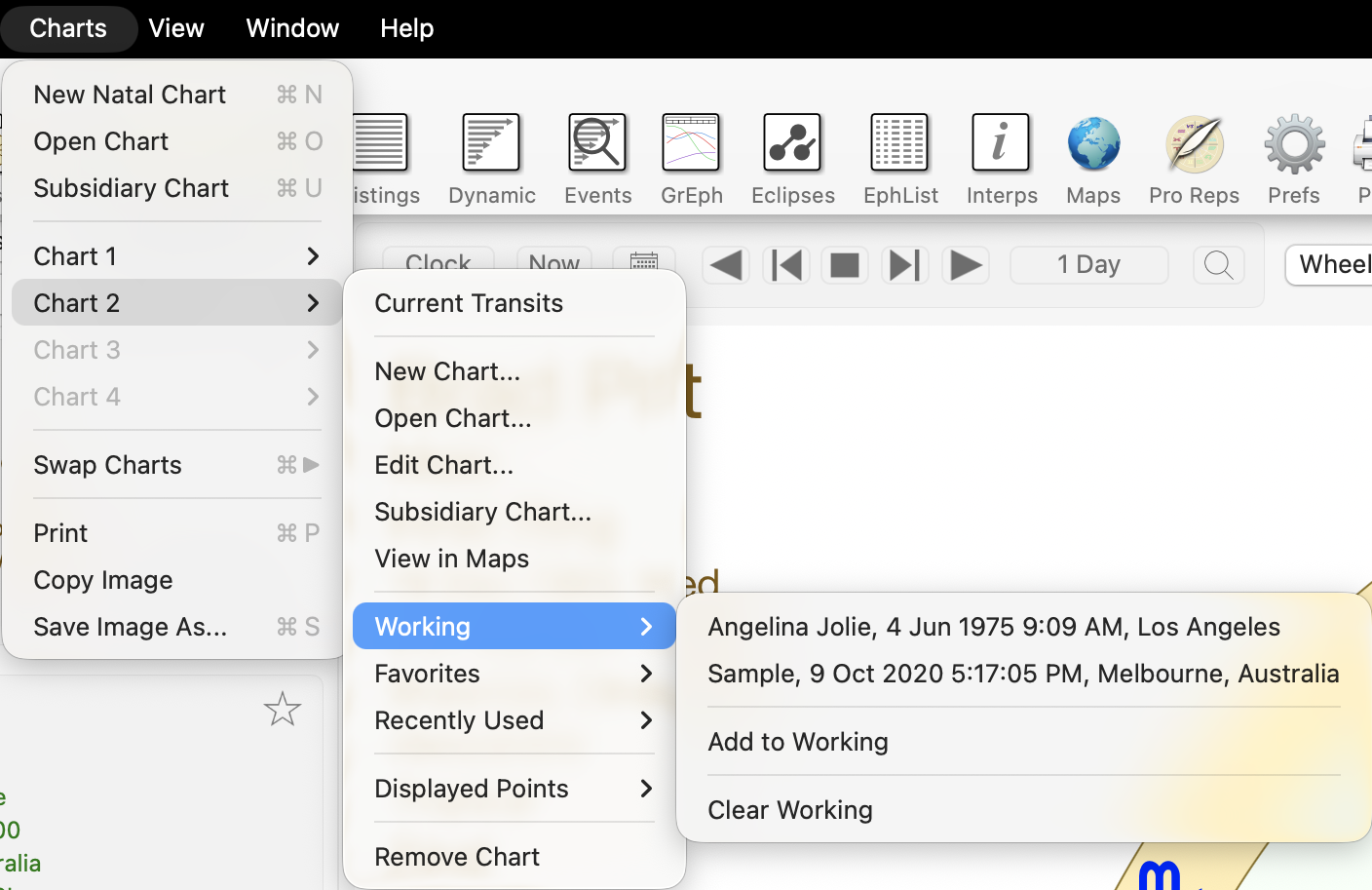
>> Other ways you can access and use the collection of Working Charts:
•In the Selected Charts pane, for any chart position clicking on the Select button, then on the Working menu option. This opens the working charts the same as pictured above, and you can do the same as described above.
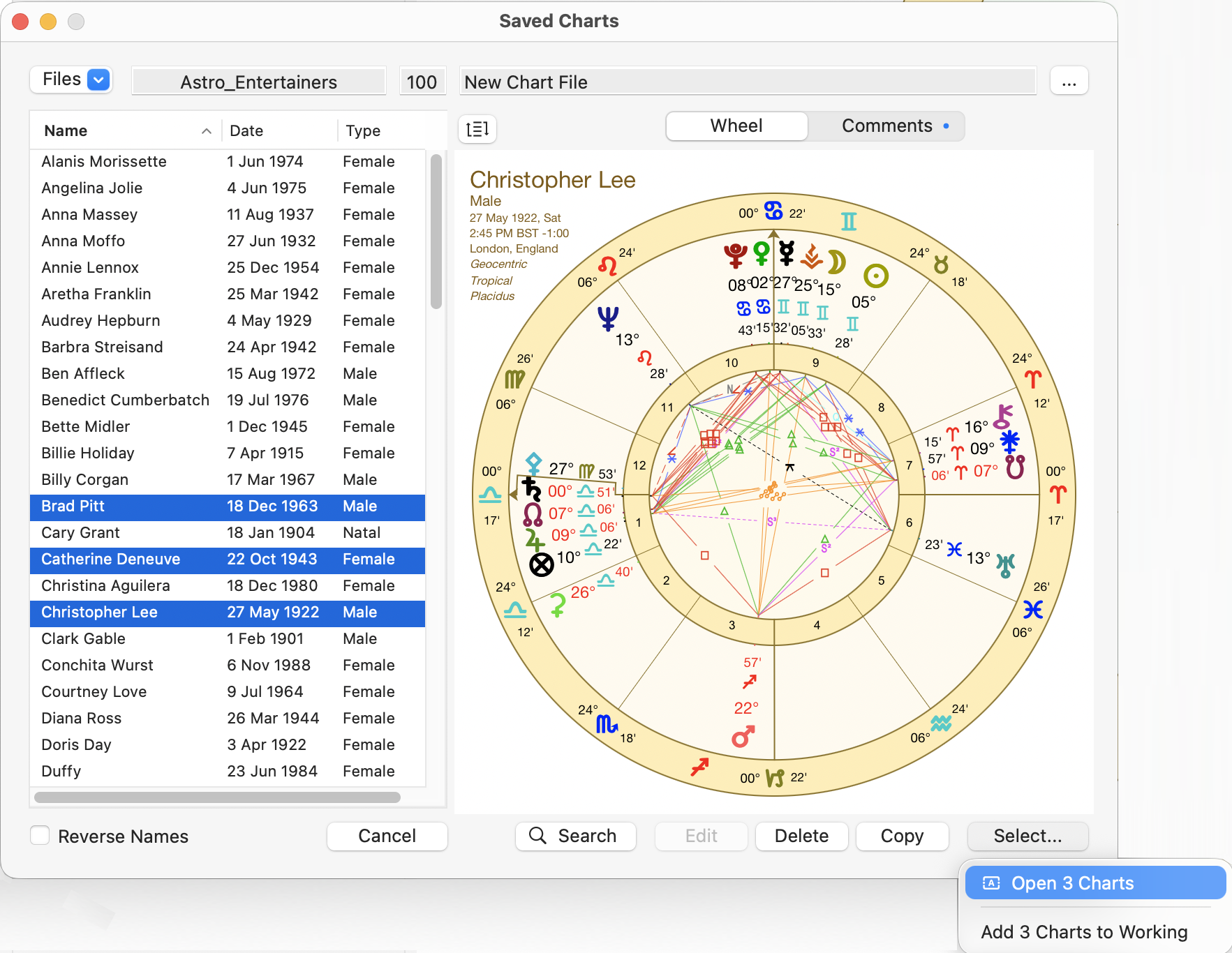
•In the Open Charts dialog, you can select more than one chart by holding down the Command button while clicking on the charts you want to open; or clicking on a chart, then holding down the Shift key and clicking on a different chart.
➢ If you have between two and four charts selected when you then click on the Select button, a dropdown menu opens with two options:
a) Open # Charts (where # is the number of charts you selected)
b) Add # Charts to Working Charts (where # is the number of charts you selected)
If you choose to "Open # Charts" they will replace all the chart(s) already in the "Selected Charts" pane, opening sequentially as they appear in the list and populating the chart positions from Chart 1 downwards, in the same order as opened.
If you select "Add # Charts to Working Charts" the selected charts will be added to the Working Charts collection (up to 20).
➢ If you have more than four charts selected when you click on the Select button, a dropdown menu opens with the single option, shown below. It functions just the same as described directly above.
- Add # Charts to Working Charts (where # is the number of charts you selected)
|
•In the (extended) Event Search dialog (opened from the Toolbar), when calculating an event that has been found, in the dropdown menu that opens when you click the Calculate button there is the option to add the event chart to the collection of Working charts.
>> Removing a Working chart
•If in the list of Working Charts you select a chart to use for a specific chart position (1, 2, 3 or 4), a tick is placed next to that chart in the list. As well a new menu item appears 2nd to bottom in the list of Working Charts, Remove from Working. If you click this it will remove the currently ticked working chart from the list.
•In the "Selected Charts" pane, click on the Select button and a menu drops down. Click on Working and the list of Working Charts is displayed. Press the Option (or Alt) key on the keyboard down and hold it down, and then click on any chart in the list you want to remove.
|
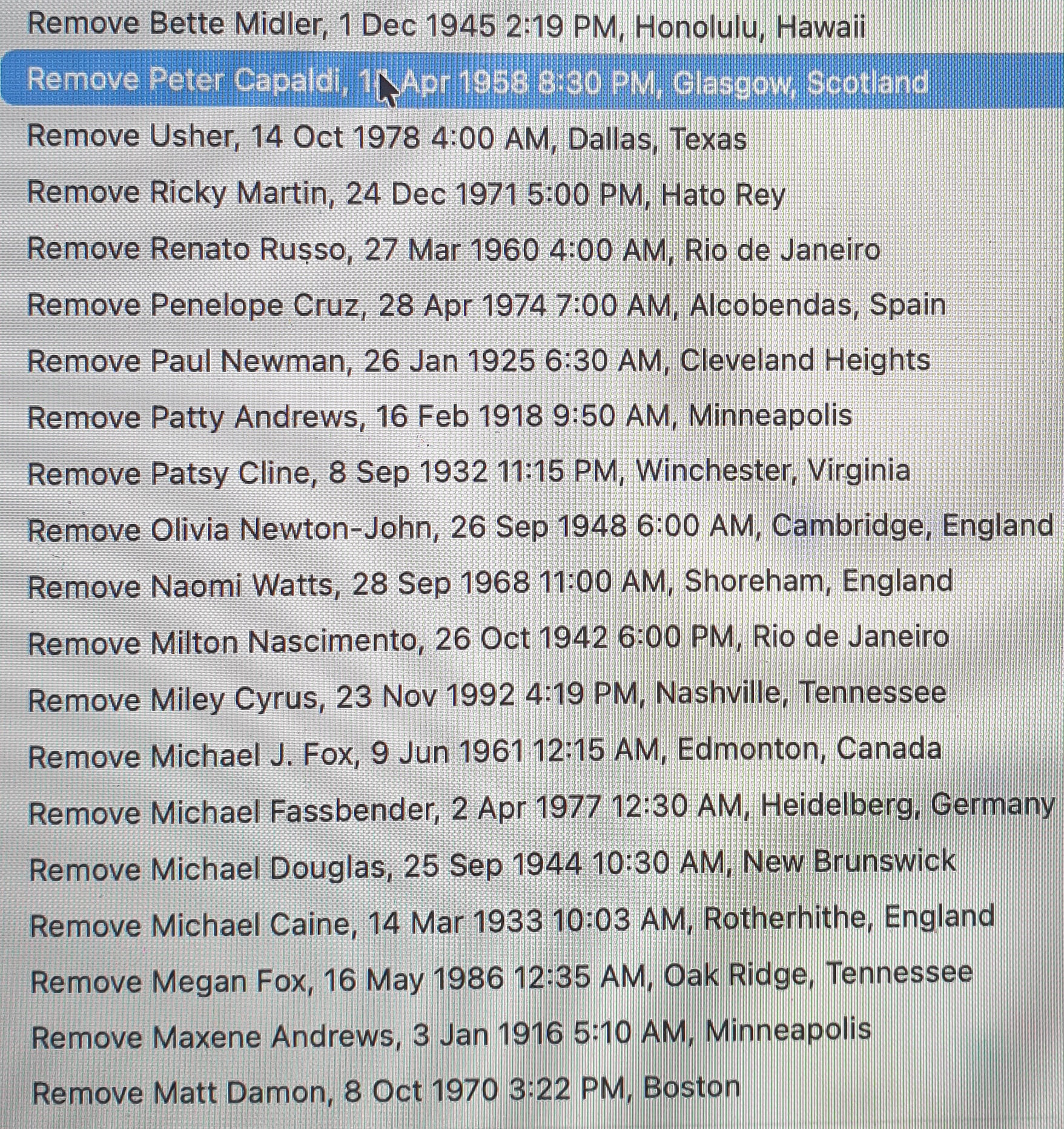
•In the "Selected Charts" pane, click on the Select button and a menu drops down. Click on Working and the list of Working Charts is displayed. To clear all charts from the collection of Working Charts click on Clear Working at the bottom of the list.
|
Favorite Charts
Similar to creating a collection of favorite charts for ready access, at any time you can designate any chart you've previously saved to be a favorite chart.
Say you regularly like to work with three charts - your natal chart at the center of a triWheel, your current progressed chart in the middle wheel, and the current transits in the outer wheel. After you have created and saved these three charts, you can then designate each to be a 'favorite' chart.
Then whenever you start a new Astro Gold session, for each chart position you can quickly go to its "Favorites" menu option and select the relevant chart for that position from the charts listed there.
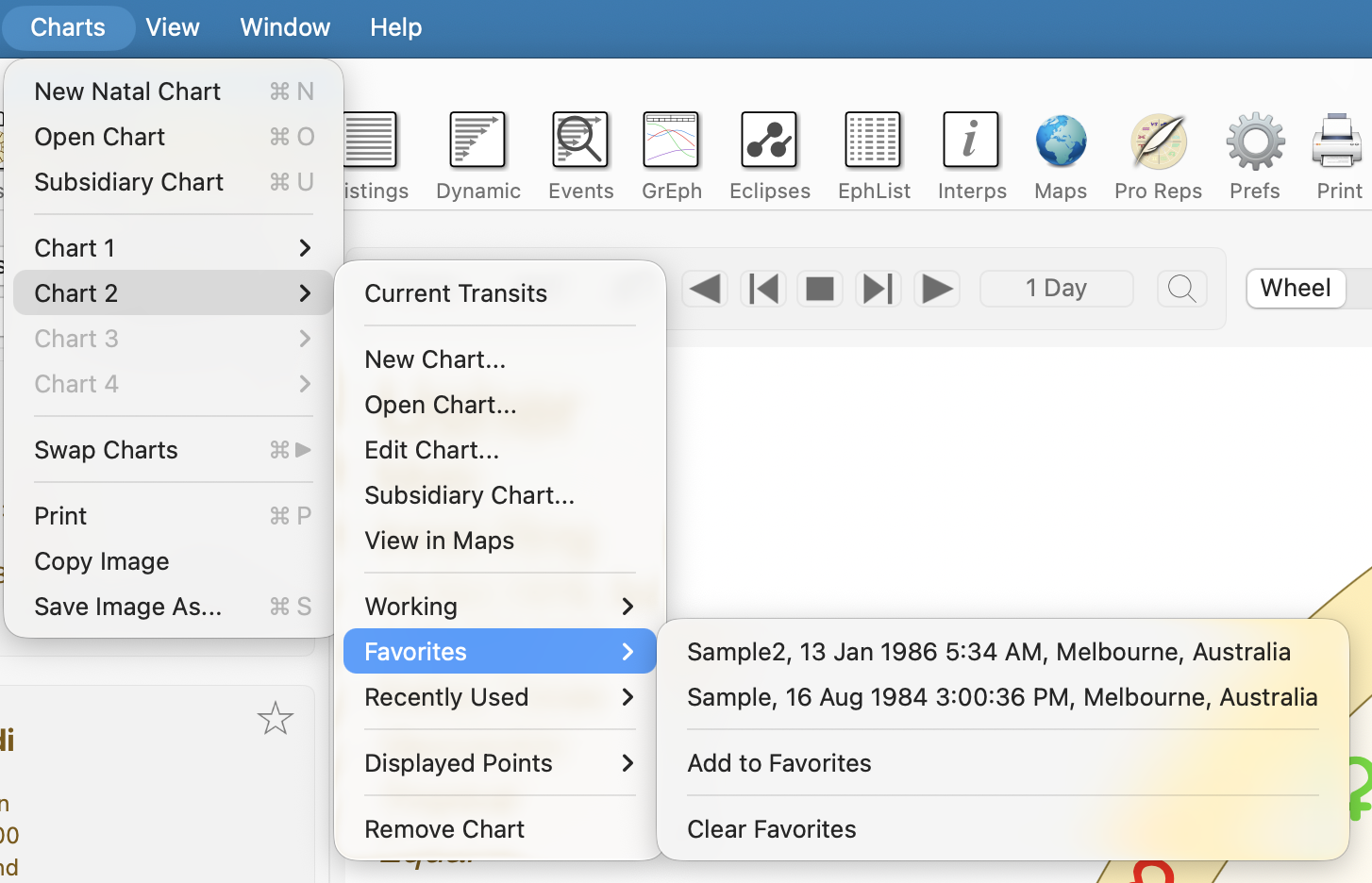 |
NOTE: This sub-menu for each chart (shown above for Chart 2) is also accessible in the "Selection Charts Pane" via each chart's "Select" button. For details see the next topic Creating, Saving, Opening and Editing charts.
TIP: Another way to designate a chart to be a favorite is to click on the star in the chart's details area in the "Selected Charts" pane. After you click on the star it becomes a gold color to show it's selected as a favorite chart. If you click on it again it loses its status as a 'favorite chart'.
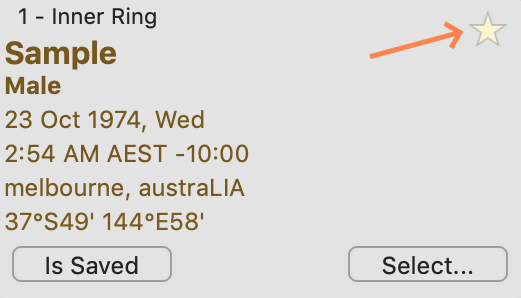 A chart selected as a Favorite (has a gold star) |
>> Removing a Favorite chart
You can remove a favorite chart from the list of favorites when viewing the list, by holding down the Option key then clicking on the chart you want to remove. See "Removing a Working Chart" immediately above for more info (the principle is exactly the same).
If you are working with more than one chart a handy feature is the ability to remove one of the charts from the Selected Charts pane, especially so if the chart is in a middle ring.
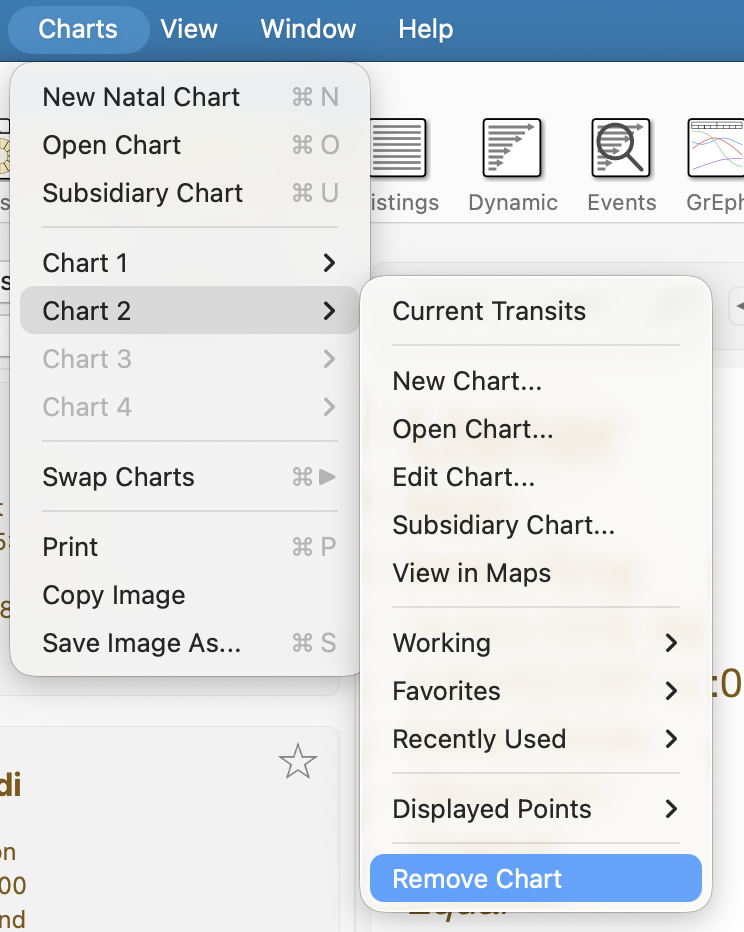
•You can do this from the "Charts" menu by selecting the sub-menu for the chart you want to remove, then selecting the Remove option on the sub-menu.
|
•You can also do this from the Select button dropdown menu in the "Selected Charts" pane, by clicking on the Remove Chart option.
|